What Temperature Is Med for Beef Cooked
Larn how to read and apply an Internal Meat and Cooking Thermometer.
Cooking thermometers accept the guesswork out of cooking, as they measure the internal temperatures of your cooked meat, poultry, seafood, baked appurtenances, and/or casseroles, to assure that a safe temperature has been reached, harmful bacteria accept been destroyed, and your food is cooked perfectly. Always follow internal cooking temperatures to be safe!
What is the Perfect Cooking Temperature for
Beef – Pork – Poultry – Fish and Seafood – Broiled Goods?
Cracking cooks use a cooking thermometer as their guide – NOT a clock.
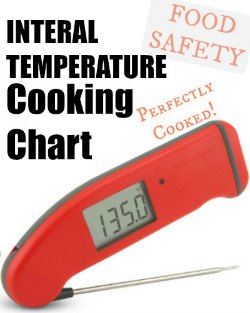 A cooking or meat thermometer should not be a sometime thing. A cooking thermometer can be used for all foods, non just meat. It measures the internal temperature of your cooked meat, poultry, seafood, breads, baked appurtenances, and/or casseroles to assure that a safe temperature has been reached and that harmful bacteria (like certain strains of Salmonella and E. Coli O 157:H7) has been destroyed. Foods are properly cooked merely when they are heated at a high enough temperature to kill harmful bacteria that crusade nutrient-borne illness. Use it every fourth dimension yous prepare foods like beef, pork, poultry, roasts, hams, casseroles, meat loaves, egg dishes, and even your baked appurtenances. If you don't regularly use a thermometer, you should get into the habit of using one.
According to the U.South. Department of Agronomics, internal temperature is the only fashion to estimate whether food is sufficiently cooked. USDA inquiry reveals that the "colour exam" can requite consumers misleading information about the safety of the foods they are preparing, since cooked colour varies considerably. For example, freezing and thawing may influence a meat's trend to chocolate-brown prematurely.
This is the blazon of cooking and meat thermometer that I adopt and use in my cooking. I get many readers request what cooking/meat thermometer that I adopt and use in my cooking and baking. I, personally, apply the Thermapen Thermometer shown in the photograph on the right. To learn more virtually this excellent thermometer and to also buy one (if you desire), just click on the underlined: Thermapen Thermometer.
Internal Temperature Chart:
The following Internal Temperature Cooking Charts are a piece of work in progress. I take been researching and testing recipes for many years to come upward with the perfect cooking and baking internal temperatures. Remember – Great cooks use a cooking thermometer as their guide – not a clock. I welcome whatsoever assistance, suggestions, and advice that you could contribute on internal cooking temperatures. Please due east-mail me (just click on the underlined): Linda Stradley. Give thanks you in advance for your help!
Beefiness, Veal, and Lamb Internal Temperature Chart:
Fahrenheit and Celsius Cooking Temperatures
For roasts of lamb, beef, or veal: place the thermometer midway inside the roast abroad from os.
Residual Heat or Carry-Over Cooking: Recall, the steak will continue to cook as it sets. The temperature will rise 5 degrees F. to 10 degrees F. internal temperature. And so, pay attending to how long you lot let the cooked meat sit down before serving.
Carry-over cooking is caused past residual heat transferring from the hotter exterior of the meat to the cooler eye. As a general dominion, the larger and thicker the cut of meat, and the higher the cooking temperature, the more rest heat will be in the meat, and the more than the internal temperature will rise during resting due to carry-over cooking. This means the meat must be removed from the oestrus at an internal temperature lower than your desired final internal temperature, allowing the residual oestrus to finish the cooking.
Roasts – Steaks – Chops
| Caste of Doneness | Internal Core Temperature | Internal Description | |
|---|---|---|---|
| Extra-rare or Bluish (bleu) | 80 to 100 degrees F 26 to 38 degrees C | deep red color and barely warm | feels soft and squishy |
| Rare | 120 to 125 degrees F 49 to 51 degrees C | center is bright ruby, pink toward the exterior portion, and warm throughout | soft to touch on |
| Medium Rare | 130 to 135 degrees F 55 to 57 degrees C | center is very pink, slightly brown toward the exterior portion, and slightly hot | yields only slightly to the bear upon, showtime to house upwardly |
| Medium | 140 to 145 degrees F 60 to 63 degrees C | centre is light pink, outer portion is brown, and hot throughout | yields only slightly to the touch, offset to firm upward |
| Medium Well | 150 to 155 degrees F 65 to 69 degrees C | more often than not grey-brown throughout with a hint of pink in the heart | house to touch |
| Well Done | 160 degrees F and above 71 degrees C | steak is uniformly brown or gray throughout | firm or difficult to touch |
| Brisket | 165 to 175 degrees F 74 to 79 degrees C | If the meat pulls autonomously easily, the brisket is ready to serve. | |
| Pot Roast | 180 degrees F 82 degrees C | If the meat pulls apart easily, the pot roast is set up to serve. Likewise called fork tender. | |
| Ground Meat Patties - Meatloaf - Meatballs | 160 to 165 degrees F 71 to 74 degrees C | For hamburger patties, insert the digital food thermometer through the side of the patty, all the fashion to the middle . |
<
Poultry Internal Temperature Chart:
Fahrenheit and Celsius Cooking Temperatures
Place the thermometer at the innermost portion of thigh and wing, and in the thickest part of the chest, checking the temperature at each of these locations.
Call back that the chicken will keep to cook after it's removed from the heat and the internal temperature will rise about v to ten degrees F. in the first few minutes it's off the heat.
| Internal Core Temperature | Internal Description | |
|---|---|---|
| Whole Chicken or Duck | 160 to 165 degrees F. 71 to 74 degrees C. | Insert it in the inner thigh area near the breast of the bird, simply not touching the os. Cook until juices run clear |
| Night meat | 160 to 165 degrees F. 71 to 74 degrees C. | |
| Chest meat | 160 to 165 degrees F. 71 to 74 degrees C. | |
| Thighs, Wings, and Legs | 160 to 165 degrees F. 71 to 74 degrees C. | |
| Whole Turkey - Oven Roasted Turkey Deep Fried or Cajun Fried Turkey | 165 degrees F. 74 degrees C. 170 degrees F. (in the breast) 76 degrees C. | Juices run clear and leg moves easily. |
| Ground Poultry (Craven and Turkey) | 160 to 165 degrees F. 71 to 74 degrees C. | For patties, insert the digital nutrient thermometer through the side of the patty, all the way to the middle. |
| Turkey Stuffing (cooked alone or in turkey) | 165 degrees F. 74 degrees C. | For the stuffing inside of a turkey, duck, or craven: place the thermometer to the center of the stuffing. |
Pork Internal Temperature Chart:
Fahrenheit and Celsius Cooking Temperatures
Place the thermometer midway inside the roast abroad from bone. Remember that the pork will continue to cook subsequently it'due south removed from the heat and the internal temperature volition rising about five to x degrees F. in the first few minutes it's off the heat.
Roasts – Steaks – Chops
| Internal Core Temperature | Internal Clarification | |
|---|---|---|
| Medium | 140 to 145 degrees F. 60 to 63 degrees C. | pale pink eye |
| Well Washed | 160 degrees F. and above | steak is uniformly brown throughout |
| Pork ribs Pork shoulders Brisket | 180 to 200 degrees F. 82 to 93 degrees C. 195 to 200 degrees F. 90 to 93 degrees C.195 to 200 degrees F. xc to 93 degrees C. | Pale white to tan. Cooked medium to well washed |
| Sausage | ||
| Raw Sausage | 160 degrees F. 71 degrees C. | no longer pink |
| Sausage (pre-cooked) | 140 degrees F. sixty degrees C. | |
| Ham | ||
| Raw Ham | 160 degrees F. 71 degrees C. | |
| Pre-cooked Ham | 140 degrees F. sixty degrees C. | |
Fish and Seafood Internal Temperature Chart:
Fahrenheit and Celsius Cooking Temperatures
| Internal Cadre Temperature | Internal Description | |
|---|---|---|
| Fish Whole - Steaks - Fillets | Fish is slightly translucent and flakes easily, | |
| Salmon | 130 to 135 degrees F. 54 to 57 degrees C. | Salmon has virtually exercise collagen. This ways it volition outset to lose moisture more quickly than beef. |
| Halibut -Cod- Red Snapper- Sea Bass-Tilapia | 130 to 135 degrees F. 54 to 57 degrees C. | |
| Trout | 135 to 140 degrees F. 57 to threescore degrees C. | |
| Tuna - Swordfish - Marlin | 125 degrees F. 51 degrees C. | Cook Tuna until medium-rare (practice not overcook or the meat will go dry and lose its flavor) |
| Ahi Tuna (Sashimi course) | 115 to 120 degrees F. 46 to 49 degrees C. | Ahi Tuna is nigh often served rare or seared rare. This is because the longer you cook information technology, the more flavour and wet it loses. Sashimi grade tuna has been flash frozen to impale any parasites. |
| Shrimp | 120 degrees F. 49 degrees C. | Cook until medium-rare and the shrimp just start to turn pink (practise not overcook or the shrimp volition get dry and lose its season). |
| Medium-size, boiling | 3 to four minutes | |
| Big-size, humid | 5 to 7 minutes | |
| Jumbo-size, boiling | 7 to 8 minutes | |
| Lobster | 145 degrees F. 62 degrees C. | Place thermometer in the tail to check the internal temperature. Lobster requires a high temperature than other fish since its muscle fibers are longer and require more oestrus to compress. |
| Boiled or Steamed, whole Lobster | 145 degrees F. 62 degrees C. | |
| Grilled Lobster | 145 degrees F. 62 degrees C. | |
| Baked, Grilled or Broiled Lobster Tail - each | 140 degrees F. 60 degrees C. | Shell cutting - piggyback lobster tail (lobster meat is exposed). |
| Scallops | 120 degrees F. 49 degrees C. | Sear, bake, or bake each side for approximately 4 minutes or until an instant-read cooking or meat thermometerinserted into their centers attain 115 degrees F. Remove from oestrus. The carryover cooking will add another 10 to 15 degrees, for an ideal final temperature of 125 to 130 degrees F. They should also accept lost their translucence and plough opaque. |
| Clams - Mussels - Oysters | Cook clams, mussels, and oysters until their shells just open. Throw abroad the ones that do not open up. | |
| Crab Cakes | 150 to 155 degrees F. 65 to 68 degrees C. |
Baked Goods Internal Temperature Chart:
Fahrenheit and Celsius Cooking Temperatures
| Internal Core Temperature | Internal Description | |
|---|---|---|
| Breads | Insert the thermometer from the side of the breadstuff. If the bread is in a loaf pan, insert it just to a higher place the edge of the pan directing it at a downward angle. | |
| Quick Breads (Breads, Muffins and Cornbread) | 200 degrees F. 93 degrees C. | |
| Yeast Breads | 200 to 210 degrees F. 93 to 99 degrees C. | |
| Soft Breads/Dinner Rolls | 180 to 190 degrees F. 82 to 88 degrees C. | |
| Scones | 200 degrees F. 93 degrees C. | |
| Sourdough BreadsSourdough Breads | 200 to 210 degrees F. 93 to 99 degrees C. | |
| Cinnamon Rolls | 190 to 200 degrees F. 87 to 93 degrees C. | |
| Water temperature to add yeast | 105 to 115 degrees F. 41 to 46 degrees C. | |
| Cakes - Cupcakes | 205 to 209 degrees F. 93 to 98 degrees C. | Insert thermometer in the eye of the cake. |
| Carrot Block | 205 to 209 degrees F. 93 to 98 degrees C. | Remember: The cooking process continues even after y'all remove the cake out of the oven. As the cake cools, the residual estrus on the surface slowly penetrates to the centre. |
| Clafouti (with fruit) | 160 degrees F. 71 degrees C. | |
| Devil's Food Cake - Ruddy Velvet Cake | 205 degrees F. 93 degrees C. | |
| Molton Chocolate Cakes | 160 degrees F. 71 degrees C. | |
| Pound Cake | 210 to 212 degrees F. 99 to 100 degrees C. | |
| Tres Leches Block, Three-Milk Cake | 200 degrees F. 93 degrees C. | |
| Upside-Downwards Cakes | 190 to 200 degrees F 88 to 93 degrees C. | |
| Cheesecake | When the internal temperature of a cheesecake rises beyond 160 degrees F. (71 degrees C.) while blistering, information technology volition ever crack. To prevent this from happening, Take it out of the oven when the cheesecake reaches 150 degrees F. (65 degrees C.) at the centre to avert over blistering. | |
| Pies | Insert thermometer a couple inches in from the edge of the pie. | |
| Chocolate Cream Pie | 165 degrees F. 74 degrees C. | |
| Custard Pie - Cream Pies | 170 to 175 degrees F. 76 to 79 degrees C. | Bake until the custard has set effectually edges but jiggles slightly in the eye when tapped on the side with a wooden spoon. |
| Fruit Pies (Blueberry, Blackberry, etc.) | 175 degrees F. 79 degrees C. | Fruit pies should be juicy and bubbles all over, especially in its center. The pie needs to chimera if it contains a starch thickener, otherwise the starch is non going to thicken. |
| Pecan Pie | 200 degrees F. 93 degrees C. | |
| Pumpkin Pie | 175 degrees F. 79 degrees C. | |
| Sweetness Spud Pie | 175 degrees F. 79 degrees C. | |
| Meringue Pies | 160 to 165 degrees F. 71 to 74 degrees C. | |
| Puddings and Custards: | Insert thermometer in the centers. Brainstorm checking temperature about five minutes before recommended time. | |
| Bread Pudding | 160 degrees F. 71 degrees C. | |
| Creme Brulee | 170 to 175 degrees F. 76 to 79 degrees C. | |
| Baked Custard (Former Mode) | 160 degrees F. 71 degrees C. | |
| Flan | 170 to 175 degrees F. 76 to 79 degrees C. |
Candy or Sugar Syrup Temperature
Fahrenheit and Celsius Cooking Temperatures
When using a temperatures specified below are for sea level. At college altitudes, decrease one° F from every listed temperature for each 500 feet above bounding main level.
| Internal Core Temperature | Description: | |
|---|---|---|
| Thread Stage | 230 to 235 degrees F. 110 to 112 degrees C. | Syrup and Binding amanuensis for fruit pastes: A spoonful of carbohydrate drizzled over a plate forms a fine, thin thread. This stage makes a syrup, not a candy. |
| Soft-ball Stage | 235 to 240 degrees F. 112 to 116 degrees C. | Fudge, Fondant, Creams, Penuche, Maple, etc: When a small corporeality of sugar syrup is dropped into very cold water, it forms a ball that does not agree its shape when pressed with your fingers. |
| Firm-brawl Stage | 244 to 248 degrees F. 118 to 120 degrees C. | Caramels and Divinity: When a pocket-sized amount of sugar syrup is dropped into very common cold h2o, it forms a brawl that holds its shape, just it notwithstanding sticky, when pressed with your fingers. |
| Hard-ball Stage | 250 to 266 degrees F. 121 to 130 degrees C. | Taffy and Marshmallows When a small amount of sugar syrup is dropped into very common cold h2o, it forms a ball that holds its shape but is pliable. |
| Soft-crack Stage | 270 to 290 degrees F. 132 to 143 degrees C. | Butterscotch and Toffee: When a pocket-sized amount of sugar syrup is dropped into very common cold h2o, it scan exist stretched between your fingers and separates into difficult but not brittle threads. |
| Hard-scissure Stage | 300 to 310 degrees F. 149 to 154 degrees C. | Brittles and Lollipops: When a minor corporeality of saccharide syrup is dropped into very cold water, it will solidify but will separates into hard brittle threads. |
| Light Caramel Stage | 320 to 335 degrees F. 160 to 170 degrees C. | Glazes, coating amanuensis Poured onto a white plate the syrup volition be honey-golden in colour. |
| Night Caramel Stage | Upwards to 350 degrees F. 177 degrees C. Watch advisedly as any temperature above 350 degrees F. begins to burn the saccharide and it volition develop a bitter, burnt gustation. | Glazes, coating amanuensis Poured onto a white plate the syrup will be deep reddish amber in color |
Vegetables Internal Temperature Chart:
Fahrenheit and Celsius Cooking Temperatures
| Internal Core Temperature | Description | |
|---|---|---|
| Broiled White potato | 210 to 212 degrees F. 98 to 100 degrees C. | Potatoes are washed if tender when pierced with a fork and the internal temperature reached. |
| Boiled Whole Irish potato | 200 degrees F. 93 degrees C. |
Water Temperature Chart (at sea level):
Fahrenheit and Celsius Cooking Temperatures
Check out my articles on How To Boil Water – Boiling Points of Water and Poaching vs. Simmering vs. Humid.
| Internal Cadre Temperature | Clarification: | |
|---|---|---|
| Tepid Water | 85 to 105 degrees F. 29 to xl degrees C. | Water is comparable to the temperature of the man body. |
| Warm Water | 115 to 120 degrees F. 46 to 48 degrees C. | Water is touchable simply not hot. |
| Hot Water | 130 to 135 degrees F. 54 to 57 degrees C. | Water also hot too touch on. |
| Poach | 160 to 180 degrees F. 71 to 82 degrees C. | Poaching is "to melt an item by submerging it in a liquid that is just barely simmering." Poaching is not a rolling eddy. Poaching, compared to boiling, is a much gentler technique. |
| Simmer | 185 to 200 degrees F. 85 to 93 degrees C. | A simmer is sometimes called a "gentle boil." Small bubbles periodically rise to the surface – the gentler and slower the bubbles, the lower the temperature. |
| Low Simmer | 180 degrees F. 82 degrees C. | |
| Dull Boil | 205 degrees F. 96 degrees C. | There is more movement and noticeably larger bubbles than simmering. |
| Rolling Eddy | 212 degrees F. 100 degrees C. | The water is rolling, bubbling, and steaming. Loftier Distance: Each 500 foot increase in distance will crusade a drop of approximately ane (1) degree in the boiling point. |
Misc.Internal Temperature Chart:
Fahrenheit and Celsius Cooking Temperatures
| Internal Core Temperature | Description | |
|---|---|---|
| Casseroles and Leftovers | 165 to 175 degrees F. 74 to 79 degrees C. | Insert thermometer in the centre. Some times the 165 degrees F. temperature but warms the casserole, and may not be non plenty for you. Then continue until 175 degrees F. is reached. |
| Sauces using eggs: Hollandaise Sauce | 160 degrees F. 150 degrees F. | As raw eggs carries a risk of salmonella infection. Rut the sauce to 160 degrees F. on your digital thermometer to kill leaner. |
| Egg Dishes Sauces using eggs: | 160 degrees F. 71 degrees C. | When eggs are role of the recipe it is necessary that the internal temperature of the baking item reach at least 160 degrees F. (71 degrees C.) in order to kill any unsafe leaner. |
| Egg Nog and Water ice Cream Custard | 160 to 165 degrees F. 71 to 74 degrees C. |
hastingswhournany.blogspot.com
Source: https://whatscookingamerica.net/information/meattemperaturechart.htm
0 Response to "What Temperature Is Med for Beef Cooked"
Post a Comment